
Pressure Piano (ECE 145)
From August 2025 to December 2025 · ECE 145 final project
Overview
A semester-long hardware design project: a pressure-sensitive electronic piano that generates dynamically controlled audio through fully analog and digital circuitry. Rather than simple on/off keys, it reads how hard each key is pressed and shapes the sound in real time.
How it works
- Pressure sensing. Force-sensitive resistors (FSRs) under the keys detect finger pressure, driving real-time volume modulation and multi-key input.
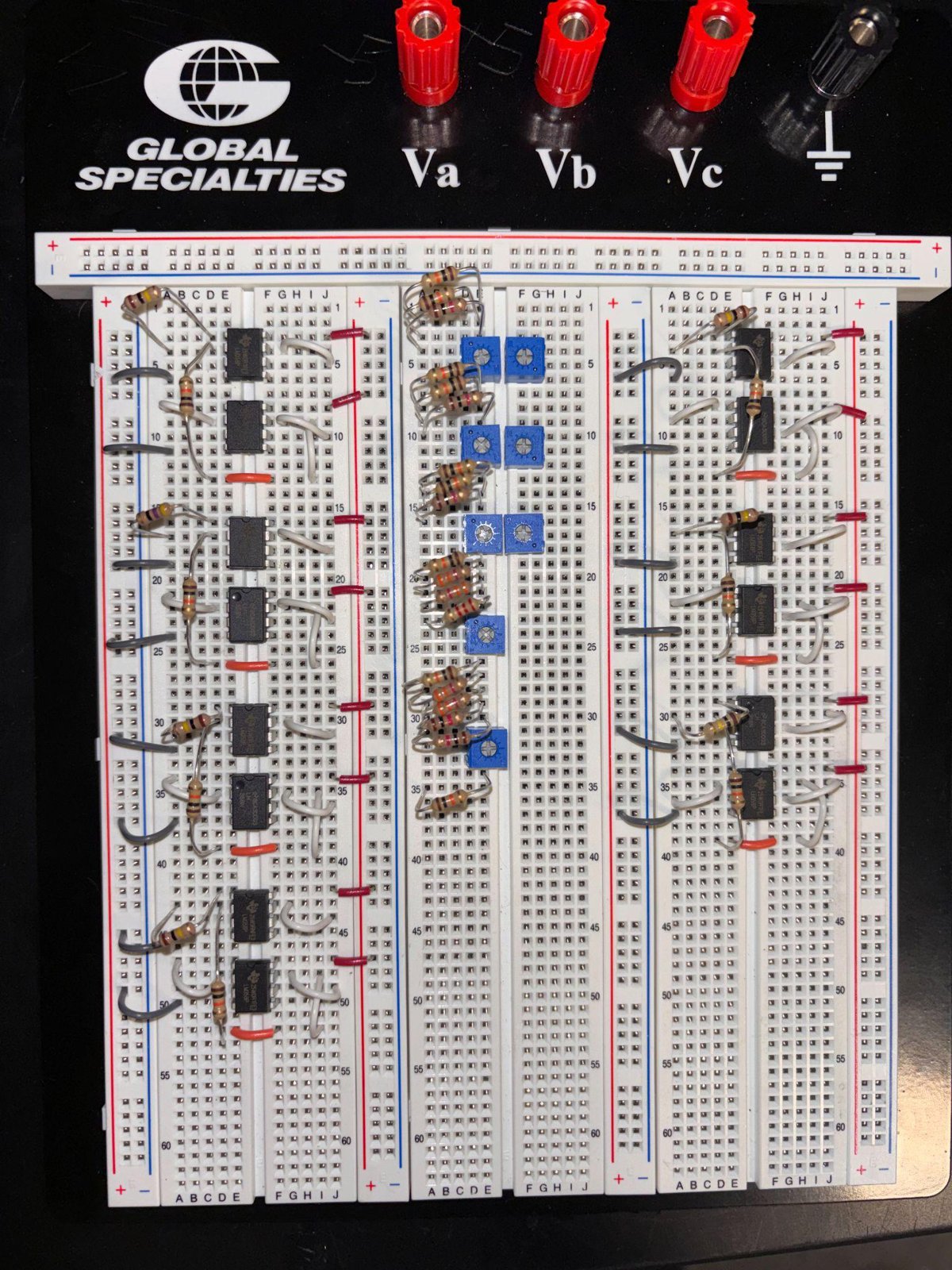
- Tone generation. 21 analog sinusoidal tone generators span three octaves (C3–B5), built from op-amp oscillators and RC networks; each was tuned and its frequency accuracy verified on an oscilloscope.
- Control logic. Tone selection and routing run through multiplexers and decoders, with a finite state machine handling octave selection.
- Audio output. An AD605 voltage-controlled amplifier sets output gain from the average pressure across pressed keys — harder presses play louder.
Building and testing
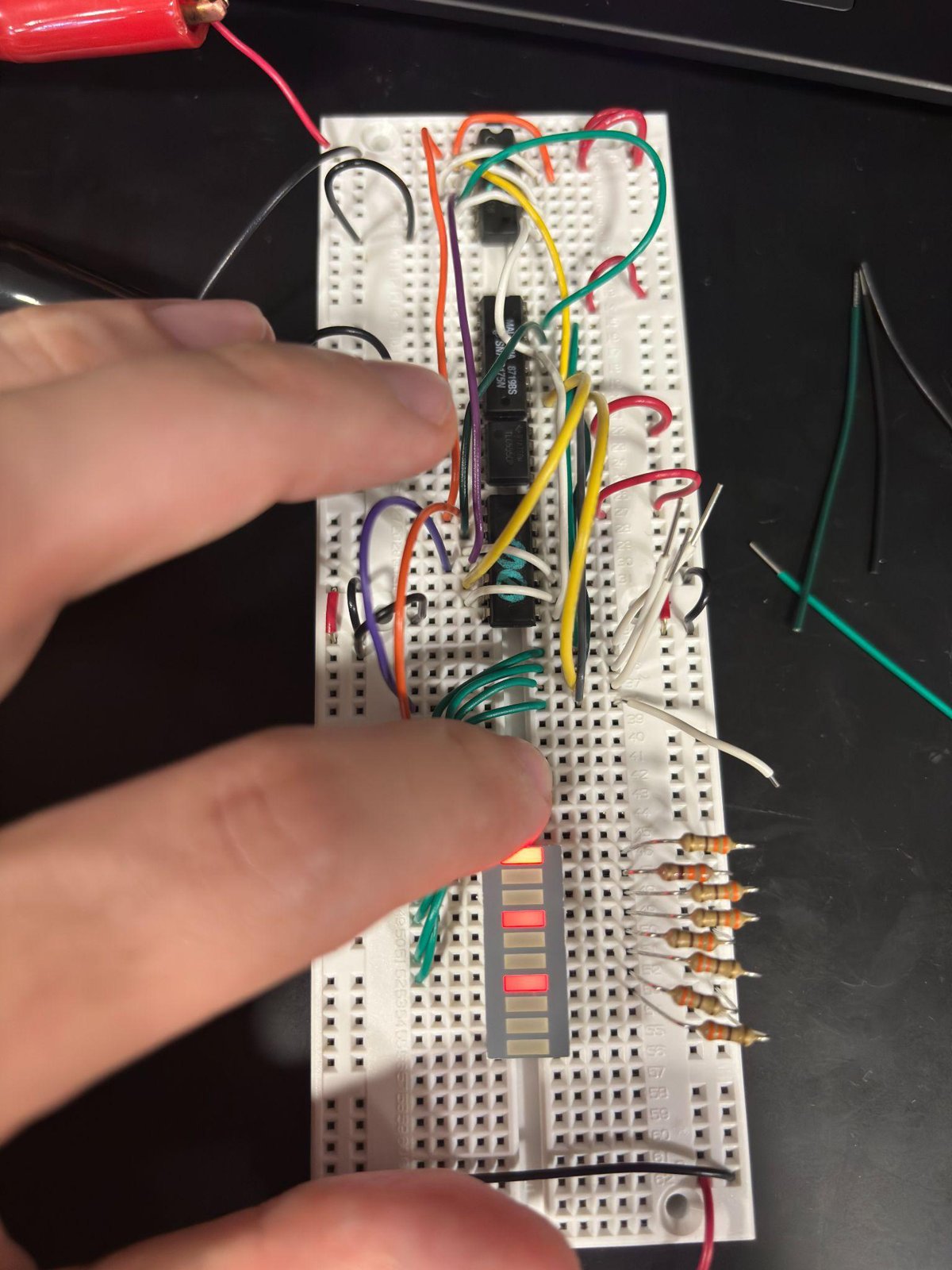
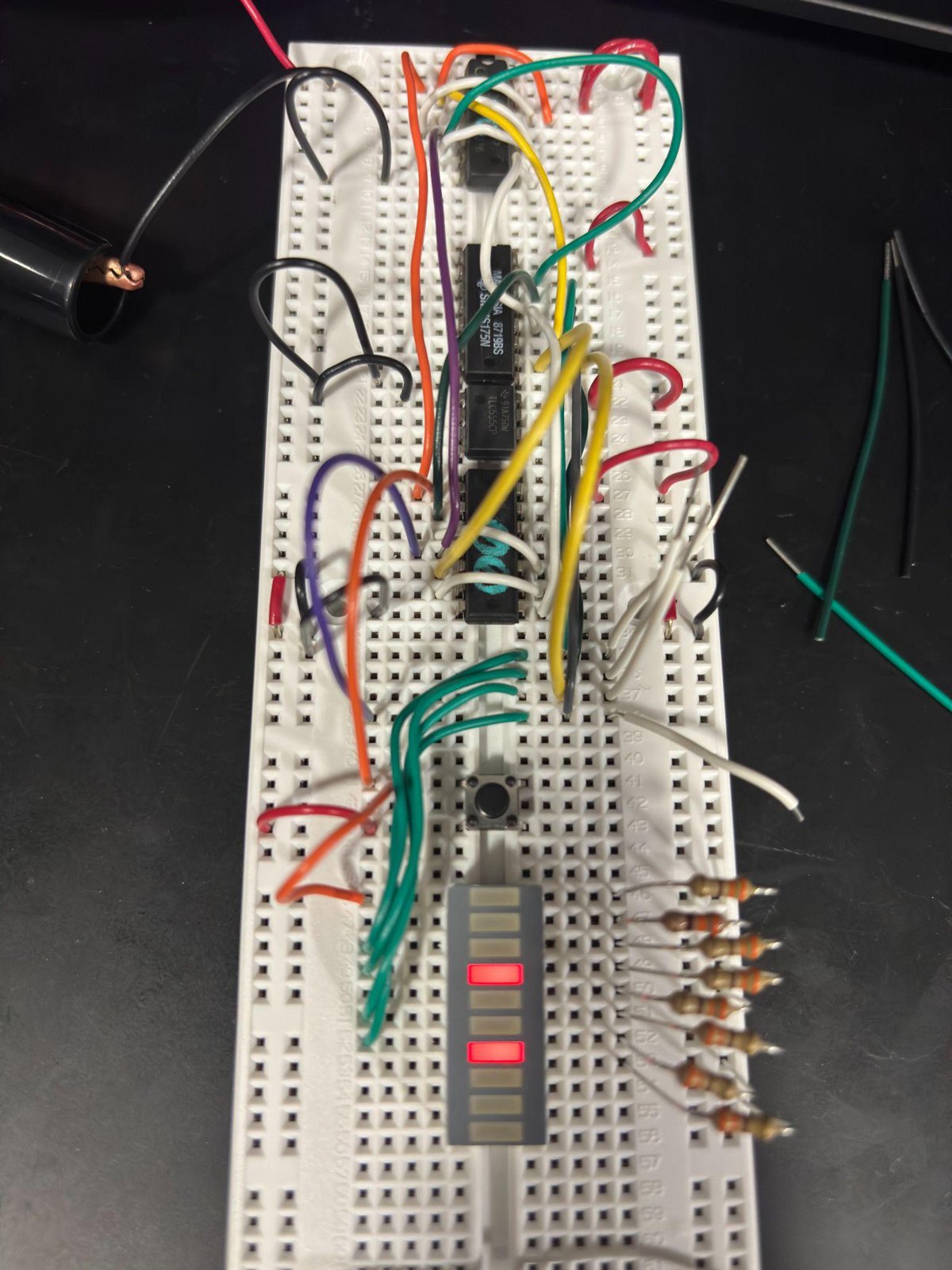
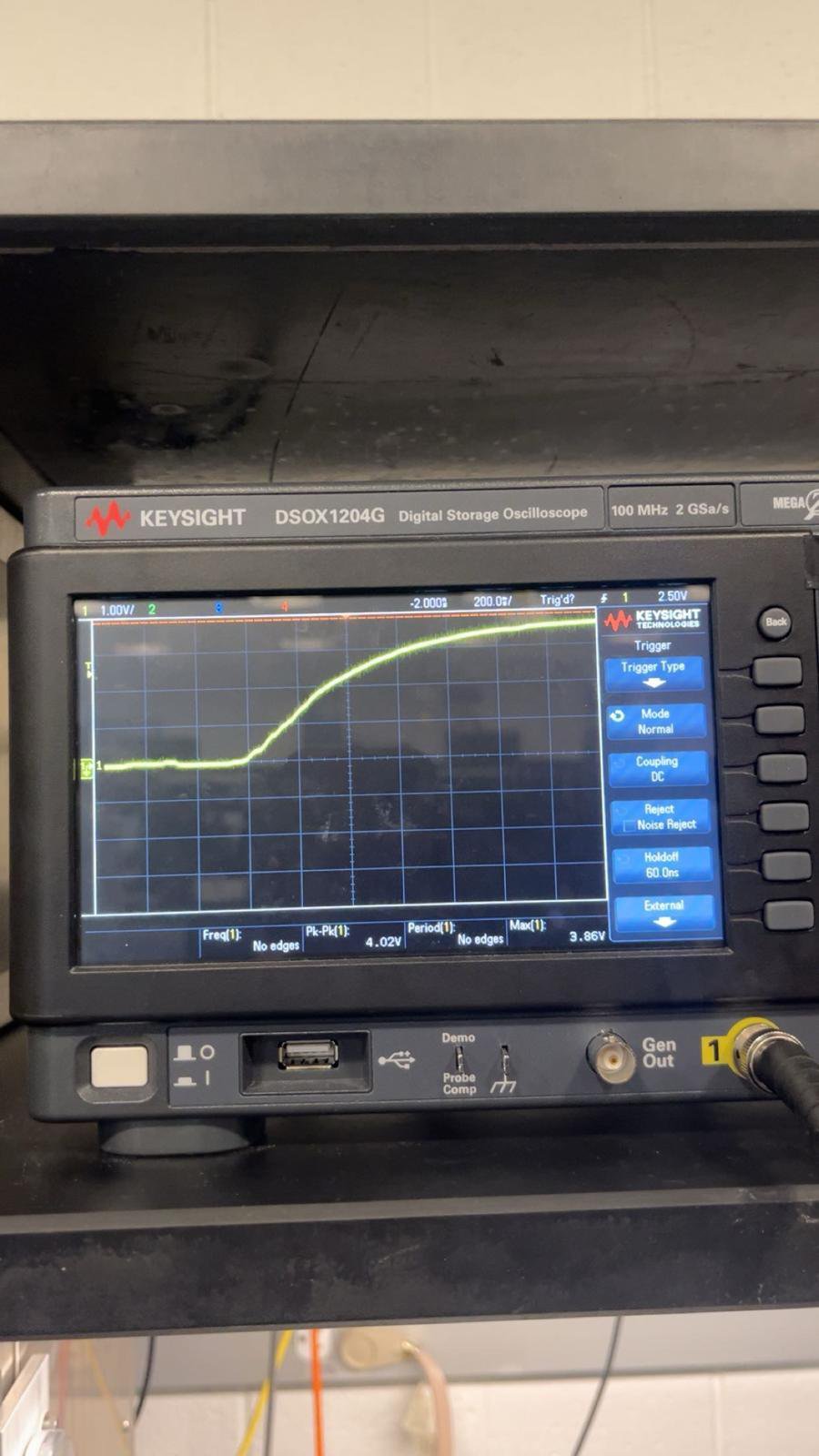
Most of the work was hands-on mixed-signal debugging and validation with oscilloscopes and multimeters, and wrestling with noise mitigation and hardware scalability.
Follow-up
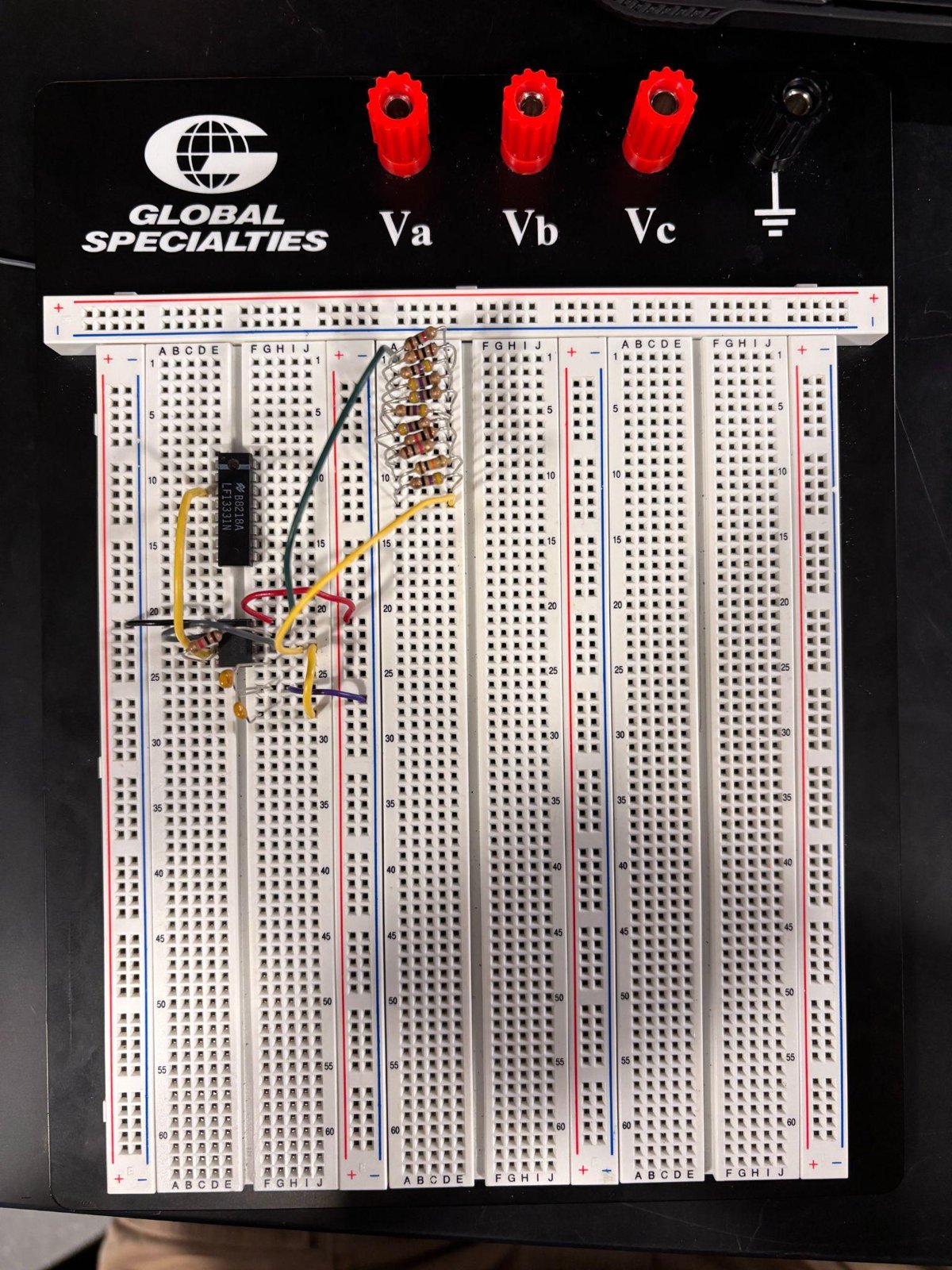
Following an issue noticed during the final demo, I’m currently working to address the noise that appears when the lower notes (C–E) in octaves 3 and 5 are played.